

Each occurrence and aggregate
These are two different limits:- Each occurrence is the most the policy pays for one incident.
- Aggregate is the most it pays across the whole policy period.
$ for the United States, C$ for Canada, £ for the United Kingdom. Field labels carry the same mark. The examples and pictures in these pages use US dollars.
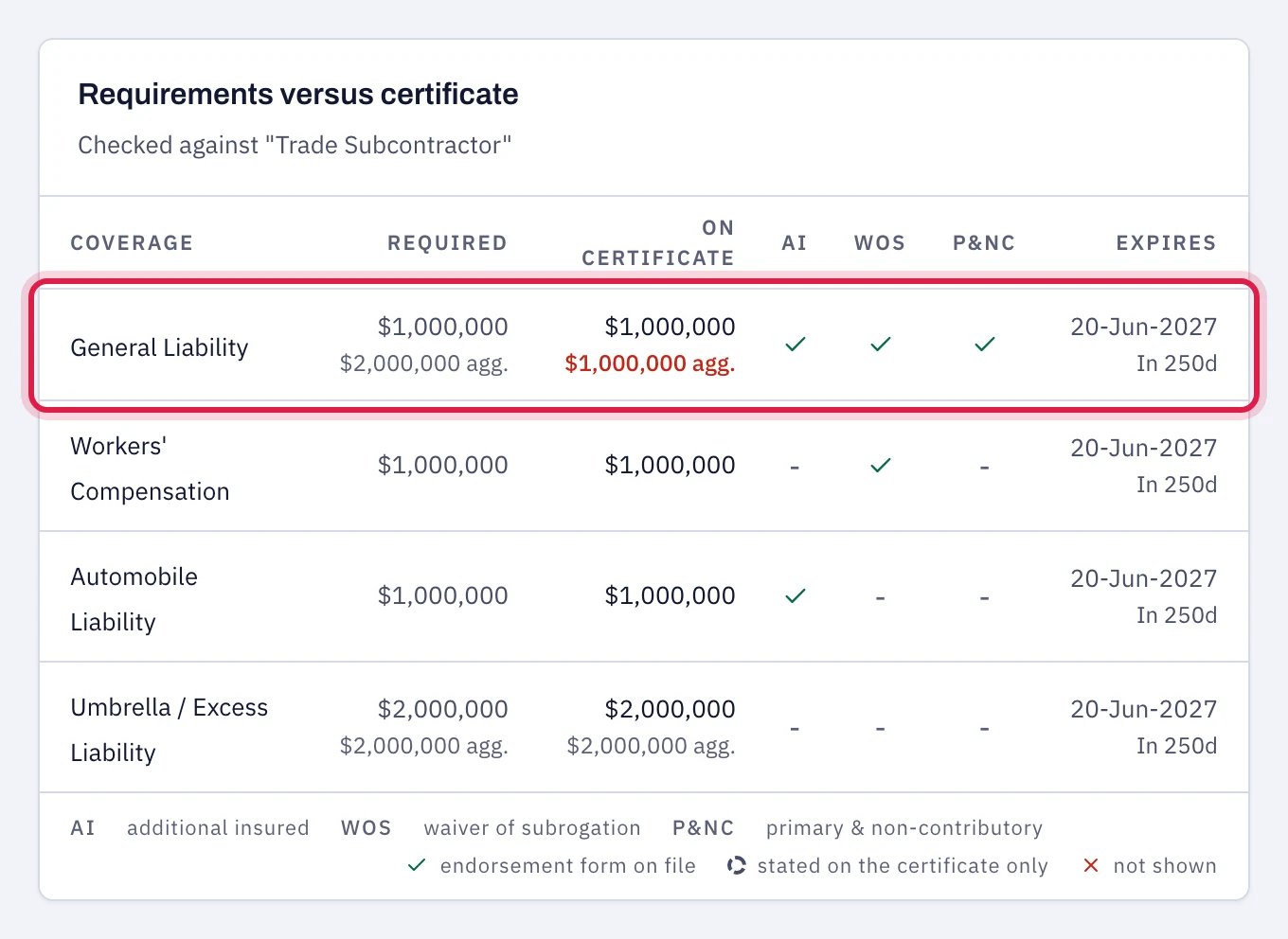
Each occurrence met, aggregate missed: the shortfall is shown in red.
Workers’ compensation is statutory, and certificates often show Per Statute checked. Record it with the Per statute box on the workers’ comp row. It is kept and shown on the subcontractor’s page, but it is not a limit: WatchMyCover checks the employers’ liability figure you enter in E.L. each accident ($) against the minimum in your template. If the template sets a workers’ comp minimum and no figure is entered, the finding is Limit not provided, whether or not Per statute is checked.
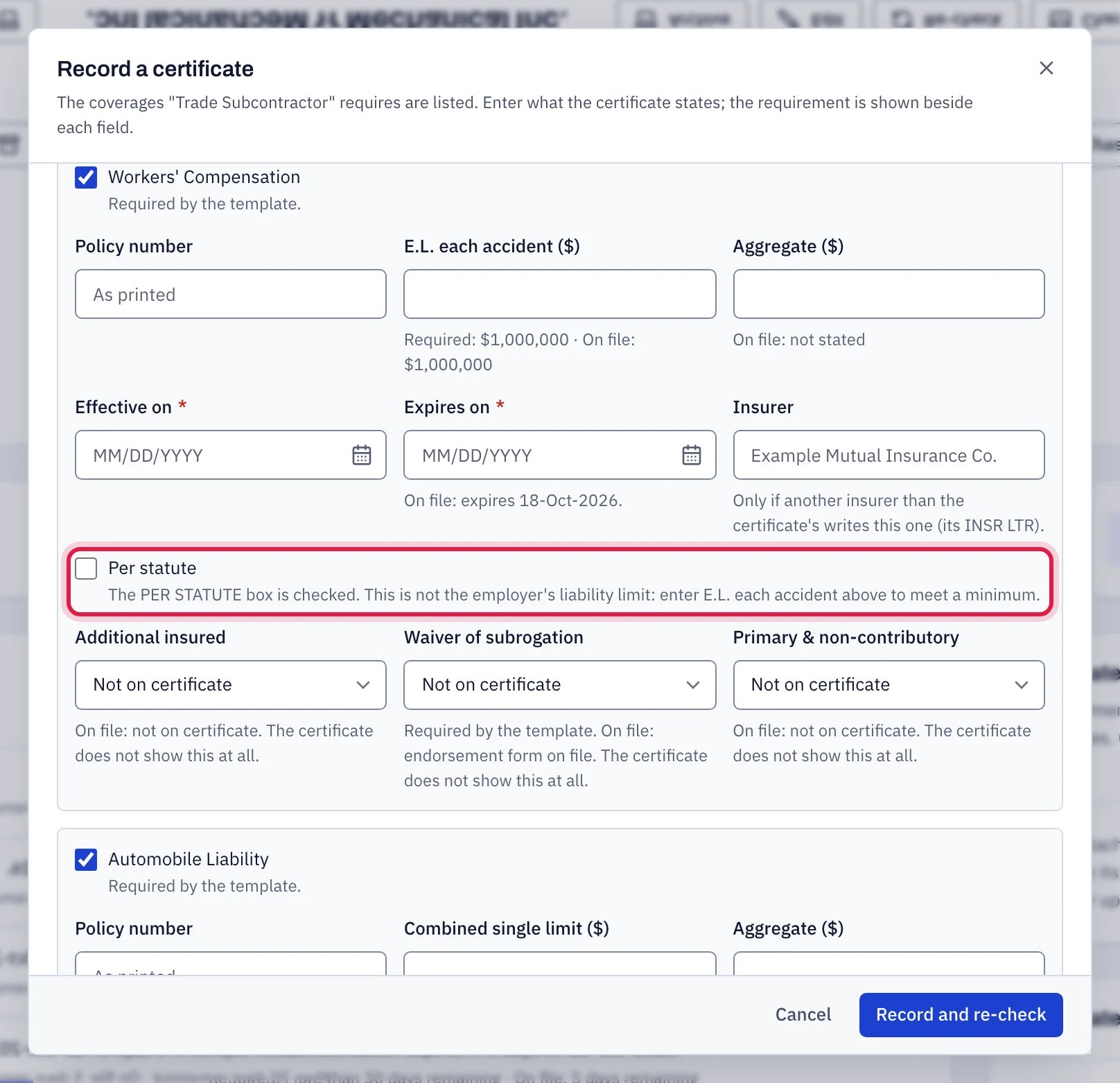
The Per statute box on the workers' compensation row. The E.L. each accident figure is still what is checked.
Mandatory or optional
A coverage marked Coverage is mandatory decides the verdict: if it is missing, expired, not yet in force, short or lacking a required endorsement, the subcontractor fails or needs review, and is chased. An optional coverage (included in the template but not mandatory) is recorded and shown, but its problems are informational only. It never changes the verdict and is never chased. A coverage the template does not include at all can still be recorded. It is listed in the subcontractor’s Cover in force card and has no effect on the verdict.Reading from a certificate or a spreadsheet
Reading a certificate PDF into the form, and importing a spreadsheet, fill in four of the eight: general liability, workers’ compensation, automobile liability and umbrella / excess. Professional, pollution and cyber liability and builder’s risk are recorded by typing them into the certificate form.Related
References
- Per occurrence limit. IRMI glossary definition.
- General aggregate limit. IRMI glossary definition.
- How the Limits Apply in the CGL Policy. IRMI commentary.
- Employers liability coverage. IRMI glossary definition.
- Commercial general liability policy. IRMI glossary definition.
- Commercial Umbrella Policy: A Few Things To Consider. IRMI commentary.